Flavor is at the heart of every food and beverage experience. As a product developer, it’s important to understand the complexities of flavor — what flavor is, how consumers perceive it and what factors contribute to the flavor experience to create a successful product.
What is flavor?
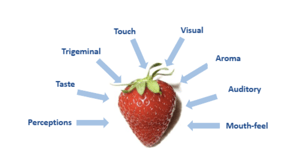
Flavor isn’t just what you taste on your tongue. It’s a multisensory experience involving inputs like smell, taste, and mouthfeel. Flavor is a full experience that activates the brain, referencing memories and creating unique experiences for consumers.
Ready to Start Your Flavor Journey With Us?
Request a Sample
Unlock your next flavor sample and future today.
Get In Touch
Contact an Account Exec, request more, info, and more.
Anatomy of a flavor
At its most basic level, flavors are made up of chemicals. This could be simple things like water and alcohol, but also things like vanillin from vanilla or citrus acid which comes from fruit.
Flavor = Flavor Components + Carriers/Solvents + Other non-flavor ingredients
Flavor Components
Could include natural extracts, aroma chemicals or reaction formulations. These stimulate the desired flavor character, enhance a flavor impression or mask undesirable notes.
Carriers/Solvents
Could include oil or water-soluble ingredients like edible oils, benzyl alcohol, ethanol, or water. These provide a stable environment to keep the flavor homogeneous and help with things like shelf-life and stability.
Non-flavor ingredients
Could include things like sweeteners, acids, salts and mineral ingredients, emulsifiers and more. The exact composition of the flavor and range of these ingredients are based on the application, the type of flavor components and customer needs.
When we’re tasting, we’re really using all of our senses. Though you may think you’re just engaging taste — smell, mouthfeel, texture, hearing and more impact our ability to accurately describe the flavors and tastes a consumer is experiencing.
Flavor knowledge gap? We’ve got you covered.
Noncommercial flavor education to help you succeed in your day-to-day.
Our Flavor University® Podcast takes you behind the scenes to where taste begins, here, at McCormick Flavor Solutions. Listen as flavor professionals talk about the how, what, and why behind the flavors in each sip and bite.
Simply put, taste happens on the tongue, aroma happens in the nose, and flavor is the full experience created when taste and aroma work together.
Taste occurs in the tastebuds on the tongue and is a response to compounds in food that tell our brain if the food we are eating is sweet, salty, sour, bitter, umami or a combination of them.
Aroma is the smell of something; the human perception of aroma is complex. When odors enter our nasal passage, they send signals to the brain to determine aroma. Aroma is much more complex than taste because there are millions of possible aroma combinations. The brain helps identify and interpret these smells, such as fruity, smoky, floral, spicy, roasted, or fresh.
Flavor is the overall eating or drinking experience created by taste and aroma together. Flavor is made of ‘aromatic’ compounds. When you chew or swallow, aromatic compounds from the food travel to the nose, where they help the brain recognize what you are eating. That is why a peach tastes like a peach, an apple tastes like an apple, or candy can taste like fruit. Without aroma, food would mostly be limited to basic tastes, which is why food can seem dull when you have a cold.
The holistic experience of eating and drinking – and the ‘flavor’ consumers perceive is a combination of taste, aroma, texture, and mouthfeel. Sensory inputs, consumer expectations, personal history, cultural context and product experience can all impact how a consumer perceives flavor.
Without flavor, food would only have its taste (sweet, sour, bitter, salty, umami). Flavor gives your product a desirable taste experience, and a signature of your brand. Flavors can also help mask undesirable taste attributes of ingredients like vitamins, proteins and more.
The flavor format for your product can vary depending on the type of product or point of addition during processing. Some products may use both formats as well. Warehouse restrictions may dictate the type of flavor you can use in your product as well, for example flashpoint limits on liquid flavors.
Sometimes flavor profiles can vary depending on the flavor format because of the solubility of the ingredients.



%20(1).png?width=300&name=MFS_Geneva_Flavor%20Lab_Carlos%20Pulido%20(1)%20(1).png)

.jpg?width=300&name=MFS_Geneva_Collaborative_Flavorist%20tasting%20beverage_lab%20(26).jpg)




.jpg?width=300&name=MFS_Flavor%20University_Podcast%20with%20Randee%20Donovan%20(30).jpg)